

Advertisements
Scammers have always relied on urgency and impersonation to steal money. Generative artificial intelligence, however, has made their tactics far more convincing and significantly cheaper to deploy at scale. Fraudsters no longer need sophisticated audio studios or professional video equipment to mimic trusted individuals or established institutions.
Today, bad actors can clone a person’s voice from a short social media clip, generate realistic video endorsements, and program chatbots that convincingly mimic bank representatives. Knowing the major AI scams to watch helps you spot the manipulation before sending money or exposing sensitive account data.
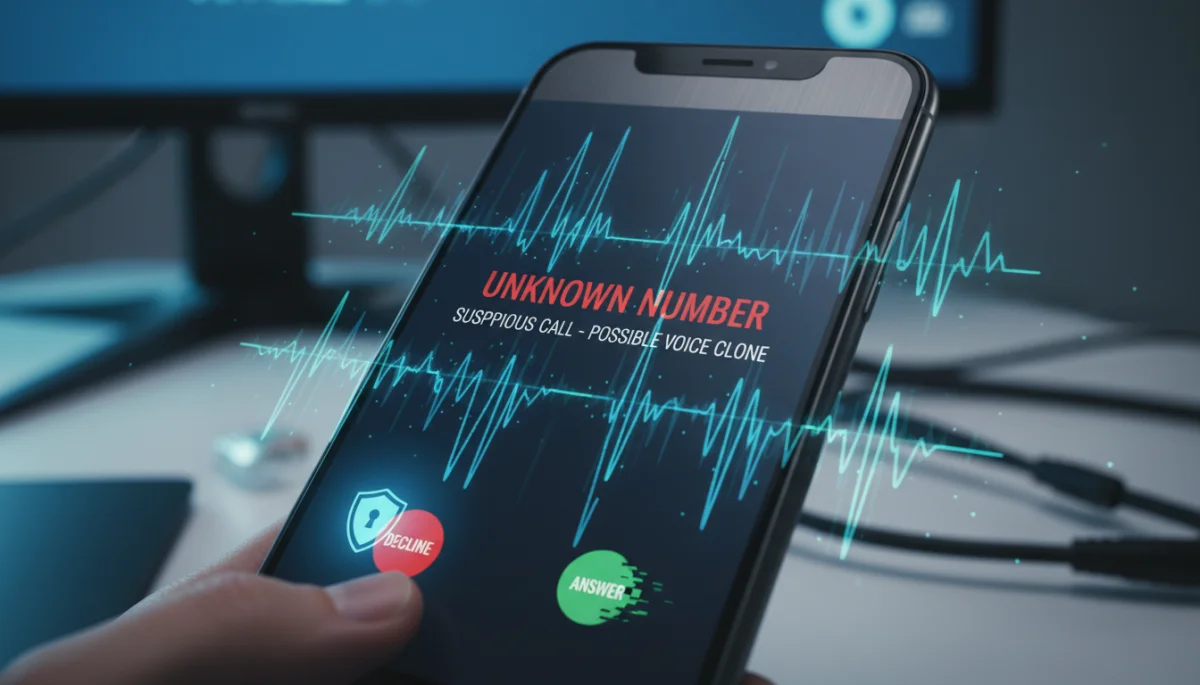
Voice Cloning and the Urgent Family Emergency
Voice cloning relies on AI models trained on brief audio snippets taken from public videos on Instagram, TikTok, or YouTube. With just a few seconds of clear speech, software can replicate tone, pitch, and vocal cadence. Scammers then call parents or grandparents, pretending to be a relative in urgent distress—such as being in a car crash, facing arrest, or stuck in a foreign airport.
The caller demands immediate payment via non-refundable channels like wire transfers, cryptocurrency, gift cards, or peer-to-peer apps like Zelle and Venmo. The synthesized voice often sounds panicky or muffled by design, masking minor robotic artifacts while preventing the victim from questioning the story.
Deepfake Video and Fake Investment Schemes
Deepfake video technology uses machine learning to swap faces or generate synthetic video footage synchronized with cloned audio. In financial fraud, these videos often feature well-known business leaders, tech executives, or public figures promoting fraudulent high-yield investment platforms or cryptocurrency giveaways.
These videos are distributed through sponsored ads on platforms like Meta, YouTube, and X. While modern deepfakes look polished at first glance, they often exhibit telltale flaws under closer inspection:
- Unnatural blinking patterns or eyes that fail to follow movement naturally.
- Blurry artifacts around the mouth, jawline, or edges of eyeglasses.
- Lighting on the face that does not match the surrounding background.
- Guaranteed returns on crypto assets that exceed standard market performance.
Fake Customer Service Chatbots and Phishing
Large language models make automated text scams conversational, grammatically sound, and responsive in real time. Criminals create spoofed websites for major airlines, retailers, or utility providers and embed automated chat widgets designed to steal payment data.
When you search for customer service phone numbers or help desks online, sponsored search ads can redirect you to these fraudulent portals. The fake AI agent answers your questions politely, asks for your account number or one-time passcode to “verify your identity,” and uses that information to drain your funds or take over your account.
Comparing Threat Types and Verification Methods
Recognizing the method helps you apply the correct verification step immediately.
| Scam Type | Primary Delivery | Key Red Flag | Verification Action |
|---|---|---|---|
| Voice Cloning | Phone call / Voicemail | High emotional urgency, requests untraceable cash/wire | Hang up and call the family member back directly |
| Deepfake Video | Social media ads / Video posts | Celebrity endorsing get-rich-quick investment | Check official corporate releases and SEC registration |
| Spoofed Chatbot | Fake websites / Phishing texts | Requests login credentials or one-time verification codes | Navigate directly to official apps or verified domains |
Practical Defenses Against AI Scams to Watch
Protecting yourself from AI-driven fraud does not require advanced technical tools. It requires slowing down and breaking the scammer’s communication loop.
First, establish a family verbal password. Choose a simple word or phrase known only to your immediate circle. If someone calls claiming to be a loved one in trouble, ask for the word. If they cannot provide it, hang up immediately.
Second, implement an independent callback rule. If you receive a call, text, or email from an entity claiming to be your bank, the IRS, or a utility company, never use the phone number or link provided in the message. Look up the verified phone number printed on the back of your debit card or on your actual monthly billing statement.
Finally, keep your multi-factor authentication secure. Never share one-time SMS verification codes with anyone over the phone or in a live chat window. Legitimate customer support representatives will never ask for your temporary security passcode.
